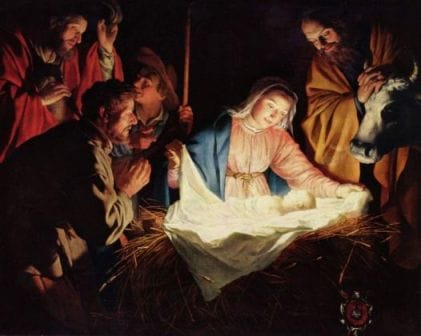
To Celebrate, or Not To Celebrate: That is the Question.
The question is, should Christians celebrate Christmas since some of its traditions appear to have been taken from ancient pagan practices? The answer is categorically, Yes! While some Christian traditions can be traced back to ancient pagan times, this is not an actual problem. If a Christian celebrates Christmas as a way to show their gratitude for the One True Creator God, initiating a plan to make eternal life possible through faith in Christ, then their participation is both approved and even appreciated by God.
Why This Question Even Exists
There is a minority of Christians and several false Christian cults that have problems with the celebration of Christmas. So let's consider their issues and see if they rise to a level of rational concern.
The New Testament does not instruct Christians to Celebrate the birth of Jesus. While this is true, the New Testament does not forbid us to celebrate His birth. This issue of celebrating Jesus’ birth starts with the understanding that first century Jews did not celebrate birthdays. They did celebrate the day a child was born, the day a child was weaned, the day a child had its first haircut and the day the child was married. But they did not see the need or purpose to celebrate the day a person was born. Therefore, neither Jesus nor His disciples ever celebrated their births.
The tradition of Christians celebrating the birth of Jesus is thought to have begun before the end of the first century. Gentile followers who celebrated their own birthdays, wanted to acknowledge the birth of the man who brought them salvation and eternal life. The problem was, because no one celebrated the day of His birth during His lifetime, nobody knew the date. This desire by followers grew as the Jesus as Messiah movement grew. By the end of the first century, it has been guesstimated that there were approximately five million Jewish and gentile converts, many wanting to know the date of His birth. While several dates were initially suggested and considered, there was one that stood out.
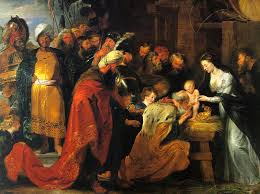
The people in the village of Bethlehem had two dates indelibly engraved in their memories. The day a large caravan of Magi arrived looking for a newborn King of the Jews, and days later King Herod ordering all infants two years old and younger to be murdered. These two dates were both remembered to have occurred in late December. It was also remembered that Herod died exactly one year after the Massacre of the Innocents, during an eclipse of the moon (Matthew 2:16-18). Today, using modern astronomy, we can know for certain that this lunar eclipse occurred on December 29, 1 BC. So, the visit by the Magi and the deaths of the children must have taken place exactly one year earlier in late December of 2 BC.
The oldest written text we have citing Jesus' birth month and day is found in the Epistle {letter} of Theophilus c.196 AD. It states Jesus was born on December 25th. Hippolytus of Rome c.204 AD wrote Jesus was born on December 25th. Julius of Africanus c.221 AD wrote Jesus was born on December 25th. And, Clement of Alexandra (b. N/A- d.215 AD) wrote that some people were celebrating Jesus’ birth date on the 25th of March, some on the 25th of April and some on the 25th of August. So followers must have agreed on the day, but not the month or the year. In 336 AD, and after having been advised by the Roman Church, Emperor Constantine officially decreed that the celebration of the birth of Jesus’ should take place on December 25th. This date was not declared as His actual birthday only the day to celebrate that he was born. Modern astronomy would later prove that this month and day was the first time the birth of Jesus was celebrated. And here's how.

As it turns out, the Magi were not following a literal moving star as stars do not move. The famous Star that first got their attention was the conjoining of the planets Venus and Jupiter which reached its zenith {brightest} on June 17, 2 BC. This was the day Jesus was born. Because the Babylonian Magi had studied the prophecies of Daniel who King Nebuchadnezzar had appointed Chief Governor over the Magi sect, they knew this was star was a sign that a great King had been born (Daniel 2:48). Then Venus began to move away from Jupiter and the Star effect faded. Still, the Magi started their 900 mile trip west to Judah in October. They were now following what was then known as a Wondering Star. In this particular case it was the king planet Jupiter. As they traveled towards Judah, the land of Daniel, the planet performed a rare triple retrograde in which it stopped and reversed its course course three times. It first stopped on October 30th, the second stop occurred on November 27th, and the third and final stop occurred directly over the village of Bethlehem on December 25th, 2 BC. Again, we can clearly see this today by simply using modern computer driven astronomy programs. The exact same programs used by NASA and SpaceX to launch rockets. Matthew tells us that when the Magi arrived, Jesus was now an infant not a newborn, and was living with His parents in "a house" in Bethlehem (Matthew 2:11 ).
Today we can know for certain that Jesus was born June 17, 2 BC and was six months old when the Magi arrived on December 25th. It was then the His birth was celebrated for the first time. We continue this tradition to this day. So if it was appropriate for the Jewish shepherds (Luke 2:8-20) and pagan Magi to celebrate Jesus’ birth day, then it must be appropriate for today’s Christians to also celebrate His birth. Right?
Therefore, those religious sects that say they do not celebrate the birth of Jesus because there is no reliable birth date, are willfully ignorant as the exact date is now known. And while others have decided not to celebrate His birth because it is not authorized in the Bible this is also not true. The truth is, these groups do not celebrate this event nor any others as a show of piety. They believe that by denying themselves some of life’s little pleasures, they are gaining extra salvation credits with Christ. Wrong!
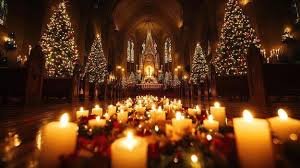
The use of bells, candles, evergreens, incense, wine served in goblet, etc. are all pagan in origin. In the first century, there were approximately 360 different pagan gods. Each one had their own temples, priesthoods, rituals and traditions. Therefore, it should come as no surprise that these combined pagan traditions eventually involved practically everything under the sun. Various religions used various objects to attract or repel everything from witches, to insuring reincarnation, warding off evil spirits, attracting good luck, fertility of humans, livestock, crops and even to produce rain. You name a need, and there was a religion with a ritual that would employ one or several objects to have that need met. So, to say that Christmas is an satanic event as it employs some objects once used in antiquity by ancient pagan religions is extremely absurd.
Churches do not use bells to scare away evil spirits but to invite people to church services. The bells also continue to mark the hours of the day as a service to the working public. Churches use evergreens not as symbols of fertility but as a symbol of hope and renewal in the bleakest of times and seasons. Christians use candles to literally light indoor services and to create a reverent atmosphere. Incense is used by some denominations as a visual aid to show how prayers ascend to God. Incense was also useful as an air freshener when large groups would gather in poorly vented rooms. At the Last Supper, Jesus explained that the wine they drank was symbolic of His blood to be spilled for the redemption of mankind. So, the early Church decided to conduct Communion using a valuable cup worthy to hold wine symbolic of Jesus’ blood.
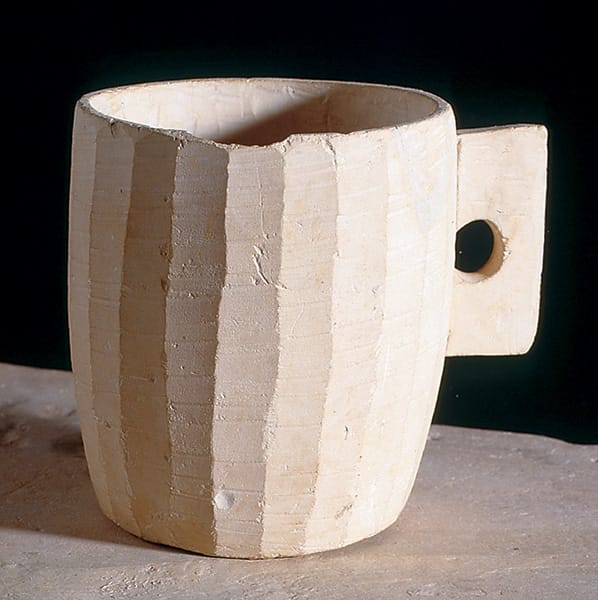
The actual cup Jesus used was the one prescribed by first century Jewish law. It was a simple inexpensive white limestone cup. After the Reformation {Oct 1517}, the protestant churches stopped using a bejeweled chalice while the Catholic Church continued its use. The Early Church initially had none of the above cited objects incorporated into the services. Some scholars believe these ancient traditions were slowly introduced starting in the third and fourth centuries. They were intended to help encourage people to transition from pagan religions to Christianity which had become the official religion of the Roman Empire.
December 25th was a pagan Roman worship date so Christians intentionally chose that date as the birth date of Jesus in order to compete. No! This is possibly the oldest urban legend, and one that apparently refuses to go away. For the record, there is no ancient text that has ever been found that states December 25th was chosen by the Early Church so as to compete with an established pagan Roman worship date. December the 21st was a pagan worship date dedicated to the Winter Solstice. On that date, people worshipped the sun god and prayed for an early Spring. That said, there was a famous Roman pagan celebration called Saturnalia. The most ancient texts reveal it was originally held for an entire week in early December. However, as the monotheistic Christian religion began to replace a pantheon of Roman gods, the Emperor Aurelian moved the celebration week to late December in 274 AD. That way, the weeklong celebrations would include December 25th and the Roman gods might now overshadow the young but rapidly growing Christian movement.
But we now know for certain that Christians were celebrating the birth of Jesus on December 25th before 196 AD which is well before 274 AD. So, if we do nothing else, we need to counter this false legend with the truth. December 25th was not created by the Church to compete with a pagan Roman holiday. Instead, the exact opposite is true. The Roman holiday was moved to compete with the Christian holiday. And, modern astronomy shows that Jupiter’s movements on December 25th exactly match the description given by Matthew when he wrote, “…the star {Jupiter} ….stood over {Bethlehem} where the young child {6 months old} was." (Matthew 2:9).
The tradition of gift giving is exactly what pagans did during their festivals. Well, all civilizations have always given gifts during celebrations. So nothing particularly pagan about that. As for Christians giving gifts, this act is reminiscent of the Magi giving gifts to Jesus’ parents. They did this to show their respect for the child. Their prophet Daniel wrote that this child would be, a human son of man, yet Divine like God, and would rule an eternal kingdom consisting of all nations and all people (Daniel 7:13-14). They also gave gifts because the family was poor and the gifts would provide much needed financial support. At the same time, Jesus was God’s gift to mankind in order to provide a pathway to salvation and eternal life. Today we give gifts at Christmas as a show love to those we care about. And we make contributions to worthy causes to help the poor and needy. There is nothing intrinsically pagan about giving gifts and helping others. Its basic human nature.
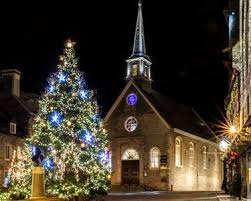
The Christmas Tree is a pagan symbol. The Bible does condemn, “... the worthless customs of the heathen idolaters who in vein cut down a tree out of the forest… Then adorns it with silver and gold....” (Jeremiah 10:3-4). But this verse is obviously referring to a tree being worshipped as a false idol. Christians do not worship their Christmas trees nor idols nor any created thing. Instead, they only worship the One True Creator God. The use of a tree as an idol was originally a Germanic pagan ritual. During the Winter Solstice {shortest day of the year}, a green pine tree was brought into the house and adorned with charm trinkets. The tree was then thought to repulse evil spirits, ghosts and to serve to connect Heaven and earth with the underworld. It also served as a reminder that Spring would eventually arrive. So this tradition had nothing to do with Christmas. In 1846, Queen Victoria and her German husband Prince Albert, both devout Christians, decided to install and decorate a tree in honor of Christmas. Thus the very first Christmas tree. Today, Christians see the evergreen tree as a symbol of vibrant life in a drab, cold, sin filled world, not as an object of worship. The star atop the tree is not symbolic of astrology. It is a remembrance of the Star of Bethlehem that announced the birth of the Saviour of the world.
Putting decorations on an evergreen tree is a pagan practice. Pagans put little magical charms on a tree to worship in the hopes of appeasing the gods. Christians put shiny decorative ornaments on a tree for a number of reasons. The ornaments sometimes represent happy remembrances of celebrations past such as school milestones, vacations, graduations, marriages, births, and anniversaries along with other major life events. None of which have any relationship with pagan worship.
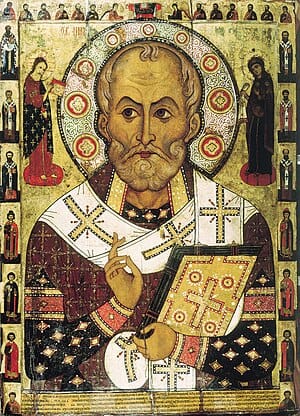
Santa Clause is a pagan elf or fairy. The original Santa was St. Nicolas, a fourth century Christian Bishop of Myra Turkey. He was known for his generosity which included giving gifts and donations to the poor. He is the patron Saint of Children. His Dutch name is Sinter Klass which evolved into the English name Santa Clause. After his death, the people of the town continued the tradition of giving gifts and acts of philanthropy. This tradition spread rapidly throughout Christendom. Sadly, the real St. Nicholas became overshadowed by the American version of Santa Claus. However, billions of children have experienced the excitement of Christmas, celebrating the birth of their Saviour and helping the poor.

The word ‘Christmas’ is not found in the Bible so it is not a legitimate word or event. The Early Church decided in 336 AD that a sacred Mass would be held on December 25th in honor of the birth of Christ. This Mass was originally called the Christ Mass which, over time, became known as Christmas.
Ultimately, while there is no mandate to celebrate Jesus birthdate in the Bible, there is no mandate not to. It is up to an individual to decide if and how they want to commemorate His birth. It can be solemn, or joyous or both. As Scripture states, “One person considers one day more sacred than another; another considers every day alike. Each of them should be fully convinced in their own mind. Whoever regards one day as special does so to the Lord.” (Romans 14:5-6)
So, while here is absolutely nothing wrong or pagan about celebrating the birth of Jesus with family and friends, Christians should never denigrate others with opposing views. To celebrate or not to celebrate should never be used as a badge of honor or a decision based on pride. As in all things, we should seek wisdom from Him who gives it liberally to all who ask (James 1:5) and accept one another in Christian love and grace, regardless of our views about Christmas.
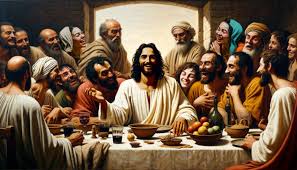
On a closing note, Jesus attend all the Jewish feast celebrations with family and friends. Jesus created His first miracle at a wedding celebration with family and friends. He held a dinner and had fellowship with His disciples the night before His arrest and execution. And, the evening of His resurrection, He attend a supper with his disciples who celebrated His power over death. Later, on the shore of the Sea of Galilee, Jesus hosted a dinner for His disciples. Jesus loved to dine and celebrate occasions with not only friends, but also those considered societal outcasts. Jesus loved people and enjoyed celebrating life. Therefore, as long as a person of faith has their eye on Christ, and commemorates His birth in appropriate ways, they are on firm theological ground.
If you enjoy the information provided on this site, please consider making a donation of any amount to help continue its production. Donate Now